Why Transport Identification Matters
When materials are transported, they move through different environments and between different teams - drivers, handlers, inspectors, and receivers.
In these situations, there is rarely time for explanation. Instead, safety depends on clear, visible identification that can be understood at a glance.
Unlike a controlled facility, transportation environments are:
- Fast-moving
- Shared across multiple organizations
- Dependent on consistent visual communication
This is where DOT (United States) and TDG (Canada) systems play an important role.
What Are DOT and TDG Labels and Placards?
DOT and TDG systems are used to identify hazardous materials during transport.
They are designed to:
- Communicate the type of hazard
- Provide consistent visual identification
- Support safe handling and emergency response
While DOT applies in the United States and TDG applies in Canada, the systems are closely aligned and share similar structures and classifications.
Labels vs Placards: What’s the Difference?
While the terms are sometimes used interchangeably, labels and placards serve different roles in transport.
- Labels are smaller and applied directly to packages or containers
- Placards are larger and displayed on vehicles, trailers, or bulk containers
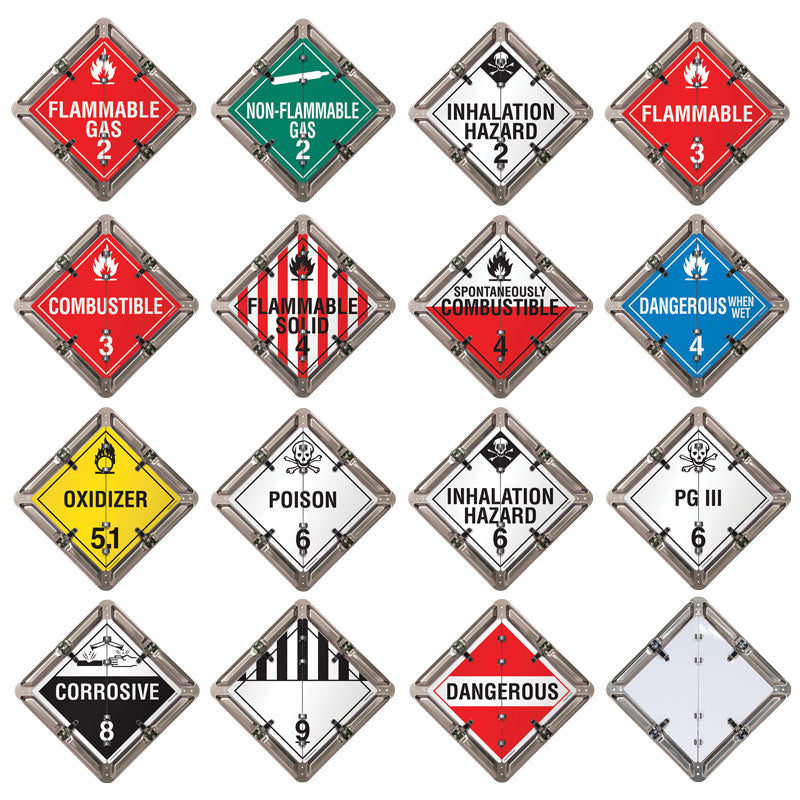
Placards are designed to be visible from a distance and are often the primary way hazards are identified in real-world transport situations.
Because of their size and placement, placards play a key role in helping people quickly recognize what is being transported.
Understanding the Basics
Most DOT and TDG labels and placards use:
- Diamond-shaped formats
- Color-coded backgrounds
- Symbols or icons
- Class numbers
Each represents a specific type of hazard, such as:
- Flammable materials
- Corrosive substances
- Compressed gases
- Explosives
- Toxic materials
These visual elements are used across both labels and placards, with placards providing larger, more visible identification for transport vehicles and bulk shipments.
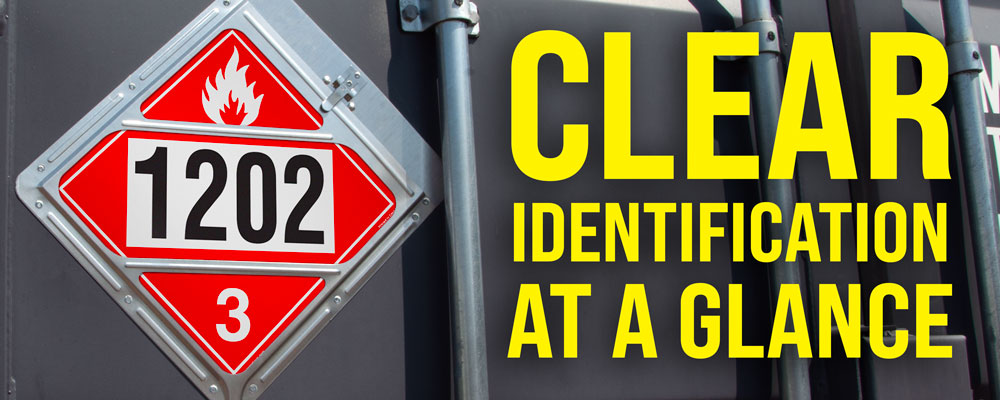
In addition to symbols and colors, many placards and labels also include UN numbers. These four-digit numbers are used to identify specific hazardous materials during transport.
While symbols communicate the general type of hazard, UN numbers provide a more precise reference to the substance by helping:
- Identify the exact material being transported
- Support faster decision-making in handling situations
- Provide clear reference for emergency responders
Together, these elements help ensure hazards can be understood quickly and consistently.
Why Visibility Matters in Transport
In transportation environments, decisions often need to be made quickly.
A driver, yard worker, or emergency responder may only have seconds to:
- Identify a hazard
- Understand the level of risk
- Determine how to respond
Because of this, visibility and consistency are critical.
If identification is:
- Missing
- Faded
- Damaged
- Hard to read
…it becomes more difficult to understand what is being handled or transported.
Choosing Placards and Labels for Real Conditions
Transport identification is exposed to real-world conditions, including:
- Weather and temperature changes
- Dirt, moisture, and handling
- Outdoor storage and long transit times
Placards and labels need to remain clear and legible throughout the journey. Durable materials and consistent formats help ensure that information stays visible from origin to destination.
A Simple Way to Look at It
Whether in Canada or the United States, the goal of DOT and TDG systems is straightforward:
Make hazards easy to recognize, quickly and consistently.
In many transport situations, placards and labels are the only information available - and they need to communicate clearly without explanation.
Supporting Clear Identification in Practice
Maintaining clear, consistent identification across vehicles, containers, and shipments helps reduce confusion and supports safer handling across different environments.
You can explore different options for transport identification in our TDG and DOT Hazmat collection.
Final Note
This article is intended for general information only. Safety requirements can vary by jurisdiction and application, and facilities should confirm which regulations or standards apply to their specific operations.